Showing posts with label Rhodes. Show all posts

Friday

Miles Davis and the "Lost Quintet"


Miles Davis' late 1969/early 1970 performances with the "Lost Quintet" (Miles Davis (tpt); Wayne Shorter (ss, ts); Chick Corea (el-p); Dave Holland (b, el-b); Jack DeJohnette (d)) are unquestionably some of the most exciting of this long career. Named for the fact that they never recorded as a five-man lineup in the studio, and up until the 2001 release of Live At Fillmore East (March 7, 1970): It's About That Time, had never been featured on an official release, the "Lost Quintet" played an overwhelmingly important role in bridging Miles' older, more familiar material with his new electric direction. This meant that sets saw the unlikely pairing of standards like "'Round Midnight" or "I Fall In Love Too Easily" with "Bitches Brew" and "Miles Run The Voodoo Down," often segueing into one another to create a singular suite, and all overflowing with incredible intensity. A monumental task that produced amazing results. Jack DeJohnette and Chick Corea are absolutely ferocious on both of these recordings.

July 25, 1969
La Pinède, Juan-les-Pins
1. Directions
2. Miles Runs the Voodoo Down
3. Milestones
4. Footprints
5. 'Round Midnight
6. It's About That Time
7. Sanctuary/The Theme

November 3, 1969
Salle Pleyel, Paris
(First Set)

1. Directions
2. Bitches Brew
3. Paraphanalia
4. Riot
5. I Fall In Love Too Easily
5. Sanctuary
6. Miles Runs The Voodoo Down/The Theme

(Second Set)
1. Introduction
2. Bitches Brew
3. Agitation
4. I Fall In Love Too Easily
5. Sanctuary
6. Masqualero
7. It's About That Time

Thursday

Stan Getz

Captain Marvel - 1972
Having famously paired with Joao Gilberto for 1963's massive Getz/Gilberto bossa nova summit, it's no surprise that another equally successful collaboration was in the cards for Stan Getz. At the time he was forming his Return to Forever band, Chick Corea got wind that Getz was on the hunt for a band with which to tour and record new material. Putting his own project on temporary hiatus, Corea plucked Airto Moriera and Stanley Clarke from his fledgling group and enlisted fellow Miles alum, Tony Williams on drums. The resulting album is almost exactly what you'd expect this collection of greats to turn out, and every bit as incredible as Getz better known Gilberto collaboration. With Corea originals making up five of the album's six tunes and Airto's Brazillian percussion filling out the mix, Captain Marvel has a heavy Latin bend throughout, but the percussive plunk of Rhodes piano and controlled chaos of Williams behind the kit pulls it all so slightly into fusion territory. Unquestionably one of Getz' finest moments of the decade, and a fascinating glimpse as to how straight these Davis graduates could play it when they wanted to.

Monday

Nucleus

Elastic Rock - 1970

By 1970, the influence of Miles Davis' electric directions ran as deep as could be imagined. Cannonball Adderley fused deep R&B grooves into his repertoire, Carlos Santana stretched into the realm of ambient jazz, and Weather Report built the entirety of their early career around the understated sonic explorations that Davis stretched to the breaking point with In a Silent Way. But across the Atlantic, Ian Carr and Nucleus took a more literal approach to absorbing Miles' influence - they simply copied the blueprint. But that's not to say that the results weren't spectacular in their own right. With a traditional jazz lineup plus the addition of electric guitar and electric piano (either a Wurlitzer or Hohner Pianet, as opposed to the Fender Rhodes that Miles favored), Elastic Rock harkens back to the electric explorations that lead up to Filles De Kilimanjaro rather than unwisely aping the Bitches Brew material that left so many groups reeling. The compositions are also extremely short by fusion standards, with many of its 14 tracks hanging around the two minute mark - making Elastic Rock come off as a collection of fragments, sketches and half-baked ideas on the surface, while in reality, its cohesiveness is stunning. Moody, thrilling, and unmistakably familiar, Nucleus’ first effort is a solid foundation for a band that would soon take the ideas explored here to the furthest reaches.

Heat Warps Music Nerd Fast Fact: Nucleus drummer John Marshall and keyboardist Karl Jenkins left the group to join Soft Machine in 1976.

Friday

Sun Ra

Strange Celestial Road - 1979

Something was definitely in the air in the late 70s, as the end of the decade saw Sun Ra turning out some of the mellowest, and certainly the funkiest jams of his storied career. And although you can't really go wrong with any of the band's output during this period, there are a few albums that rise to the top. Lanquidity, featured some time ago here at the Heat Warps, is one of them. Strange Celestial Road is another. Riding the dark sludgy grooves that propelled Lanquidity to remarkable depths, Strange Celestial Road comes off like a dusty, inexplicably exuberant big band record from the future. Sun Ra's heavily effected electric piano is definitely the focal point here, and while he pulls miles of wild sounds from his machine (at times mimicking the whirr of a dentist's drill to extraordinary effect), none of the album's three tracks skitter off into mayhem as they so easily could. Rather, a skeletal groove threads throughout the proceedings, ultimately tightening the reins and pulling the players, as well as the listener, back to the slow churn of its funky core. A heady affair if there ever was one.

Tuesday

Herbie Hancock

Thrust - 1974
Following a period of intense exploration throughout the early 1970s, Herbie Hancock felt it was time to cut the fuss and drop the funk. And drop it, he did. With his massively successful 1973 Headhunters LP all but solidifying the genre of jazz-funk, it's truly amazing how its follow up has been left in the shadows for so long - especially when considering that Thrust may be the better album! The most notable difference from its predecessor is in the tighter, more complex drumming of Mike Clark, who had recently replaced Harvey Mason in the band's lineup. If you've heard anything from Thrust, it's likely to be Clark's frequently-copped groove that opens the album. And with that, the tone is set. Hancock's keyboard work is typically incredible - taking the wah'd clavinet and the ARP synth to greater depths than on any of his early 70s LPs - while Bennie Maupin fills out the low end with the bass clarinet that is a cornerstone of fusion in its own right (just check out the man's discography for heaven's sake!). While Headhunters may contain "Chameleon", Thrust lays claim to everything else. A magnificent LP from end to end.


Miles Davis

At Fillmore - 1971

The result of a four-night stand at the Fillmore East running from June 17-20, 1970, At Fillmore is among the finest, and undoubtedly the most controversial live album in Miles' official catalogue. In order to fit Miles' Wednesday-Saturday residency into a double LP package, producer Teo Macero pulled some of the finer moments from each night and stitched them together to form a medley that took up a single side of vinyl. Initially, some listeners derided Macero's efforts on the basis that several tunes were repeated throughout the album, while others bellyached that editing the songs in such a fashion removed the groove that propelled each night's set. More savvy listeners however, heard the album as a brilliant distillation of Miles' live performance and a compelling record of the band's ability to so drastically reinterpret the same material night after night. Aside from the addition of Keith Jarrett on a wah-wah'd combo organ, At Fillmore features the same personnel that produced the live Black Beauty LP only two months previous - yet the two albums are so different that they could have been recorded years apart. Whereas Black Beauty was loose, mean document, ferocious to the point of frightening, At Fillmore is ambient, funky, tightly wound and extremely focused. On Black Beauty, the music was in complete control. Here, the ensemble holds the reins. Listen close. The results are absolutely incredible.

Weather Report

Live in Tokyo 1972

While Weather Report were tight, focused and (at times) overly sick on their studio LPs, they were a completely different animal in a live setting. On stage, the band's focus turned from creating a singular, rigidly structured organism to allowing the members to stretch out on their own terms. And stretch out, they did. As expected, Joe Zawinul is tremendous, effortlessly switching from acoustic piano to heavily modulated Rhodes, often sounding like multiple keyboardists at once. However Miroslav Vitous and Eric Gravatt really come into their own here; managing to hold down the groove while tearing off into their own direction throughout. A truly captivating album and one of Weather Report's finest, hands down.


Wednesday

Herbie Hancock

Crossings - 1971

A couple of years before he emerged as one of the most commercially successful fusion artists of the 1970s, Herbie Hancock was deeply entrenched in creating albums that took electronic music to soaring heights and stretched improvisation to its limits. The second in a trilogy of LPs that included Mwandishi and Sextant, Crossings benefits from incorporating the elements that defined what was so unique about both of these; the solid, proto-funk grooves of the former and the far out synth-based, skeletal rhythms of the latter. Comprised of a mere three tracks, the first of which is a 24-minute, 3-part suite, this is avant-garde funk at its finest, performed by a crew of musicians that all but defined the genre. Very weird, precisely executed and extremely rewarding.


Monday

Miles Davis

Deep Brew (Bitches Brew Recording Sessions) - 1969
Volume 1, Volume 2
Aside from being among the most powerful statements in the history of recorded music, Miles Davis' 1969 Bitches Brew LP also stands as a testament to the incredible editing work of the album's producer, Teo Macero. Throughout three studio sessions on August 19-21, 1969, Miles led ensembles of up to 13 musicians through numerous song sketches, bizarre atonal experiments and dense polyrhythmic vamps that forced them to listen closely to one another and allow the music to take on a life of its own. In some of the quieter moments you can actually hear Miles giving instructions by snapping his fingers to set the tempo, telling individuals where to solo, or, in his distinctive whisper, saying, "Keep it tight"; indicating that all the while he and Macero maintained a clear picture of how they would fuse these sections into cohesive compositions. Considering this method of recording, the resulting LP is nothing short of astonishing.

Going well beyond the expansive Complete Bitches Brew Sessions box set, Deep Brew, Volumes 1 & 2 collects nearly all of the material recorded during those August sessions. Amazing stuff.

*Many, many thanks to Heat Warps' visitor Hansame for sharing this incredible set!

Wednesday

Joe Zawinul

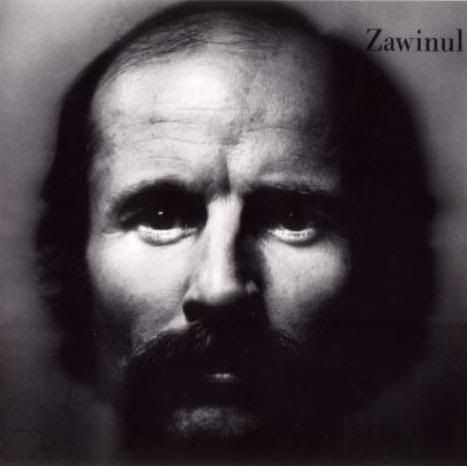
Zawinul - 1970

There has possibly never been a pianist who has explored the Fender Rhodes to a greater depth than Zoe Zawinul ... except for maybe Herbie Hancock. Thankfully, this LP contains them both. A towering monument of late 60s jazz fusion, Joe Zawinul's self titled LP stands up to In a Silent Way as one of the greatest electric piano-based albums of all time. In fact, it's easy to look at Zawinul as the sequel to Davis 1969 masterpiece, as both LPs included Zawinul and Hancock on Fender Rhodes, both feature extended exercises in subtle textures and mood, both include Zawinul's tune "In a Silent Way", albeit in drastically different forms, and esthetically, both covers are strikingly similar in the way the bandleader's head takes up the entire frame. Similarities aside, Zawinul and Hancock's use of ring modulators, echo and a bevy of other effects take the music and the Rhodes itself, into an entirely different sonic realm than Davis' album and well past the psychedelic boundaries that any rock group (then or now) could dream to tread. A landmark LP on so many levels. Enjoy.

Thursday

Miles Davis

Directions - 1980

To satiate his fans during his "retirement" in the late 70s, Columbia issued two fine rarities collections that focused on the rarely-heard (at that time) transitional periods of Miles Davis' career, Circle in the Round, which chronicled the years 1955-1970, and Directions, which covered 1960-1970. While Circle in the Round is notable for containing an all-acoustic version of Sanctuary, a tune that was later re-recorded in full electric glory for Bitches Brew, as well as a hauntingly majestic rendition of David Crosby's Guennevere, Directions simply overflows with gems from Miles' late 60s fusion peak - the rare period before everyone else fell in line and the road belonged to Miles alone. The Complete In A Silent Way and Jack Johnson session box sets have since collected most of the tunes on Directions, however this double LP places them in a context that illustrates Miles' transformation like neither of the sessions sets could, simply because it speeds up the process. Highlights include the tightly-wound funk morsel "Duran" featuring a smokin' John McLaughlin and "Willie Nelson" in all its wah-wah glory. Dig it now.

*Another fine Slidewell contribution. Thanks again to him for sharing the wealth with The Heat Warps.

Friday

Miroslav Vitous

Mountain In The Clouds/Infinite Search - 1969

Much like John McLaughlin's Devotion LP, Mountain in the Clouds was recorded in that rare pocket of time after which all of its players had (in most cases) recently left Miles Davis' band, but hadn't yet formed their own groups. The music is, not surprisingly, very similar to what Miles was doing towards the end of the 60s and at many points sounds like Bitches Brew filtered through a smaller ensemble. Originally released in 1969, but trimmed down and reissued the same year (who on Earth knows why...), the version here is the original Mountain in the Clouds LP and therefore contains the track "Cerecka" which was trimmed from the subsequent Infinite Search reissue. Very confusing, I know. Either way, this often overlooked album is a high water mark of the early days of jazz fusion and a must-have for those looking to dive a little deeper into Miles' directions.

Lineup:
Miroslav Vitous, bass
Joe Henderson, tenor sax
John McLaughlin, guitar
Herbie Hancock, electric piano
Jack Dejohnette, drums
Joe Chambers, drums

Tuesday

Sun Ra

Lanquidity - 1978

For those who've always wanted to explore Sun Ra, but found him a bit heavy, heady or just plain hard to get into (guilty as charged), Lanquidity is a godsend. This dark, murky blend of slow funk grooves, dense orchestration and Sun Ra's delicately wild Fender Rhodes loosely groups this LP with Miles Davis' early 70s albums, albeit if they were turned down to about half speed. Here are some excerpts from Matthew Wuethrich's great All About Jazz article on this album.

"You feel as if this music should go down easy, but the candy coating turns out to be a sticky, unescapable molasses."

"This funk-stuck-in-slow-motion points to an uncomfortable dread waiting below the surface."

"...the lumbering grooves at first seduce with their simplicity, then intoxicate with their richness, until finally the darker sound textures overtake you and drop you in a place you had not imagined before."

This one came out of left field this year to become one of my favorite records. You'd be a fool to pass it up.

Wednesday

Miles Davis

Black Beauty: Live at the Fillmore West - 1970

Considering the flood of Miles Davis live LPs hitting the market in the early 70s, it's easy to understand why Black Beauty has remained somewhat under the radar. Shortly after the release of Bitches Brew, Miles stripped his live band down to electric bass (Dave Holland), drums (Jack DeJohnette), soprano sax (Steve Grossman), Fender Rhodes (Chick Corea) and percussion (Airto Moreira) and began making music with an intense focus on grooves and textures, while melody basically went out the window. Miles' horn playing is brutally intense, but his tone still retained the warmth and richness of the Bitches Brew sessions -- not yet replaced by the shrill, electric-guitar like tone he would soon adopt on records like Live Evil and On the Corner. But what really stands out on this live album is Corea's incredible Rhodes work, gone completely over the top with wah, ring modulators and tape echo effects, and in several places managing to sound like two pianists at once. One of the wildest albums in the Miles Davis canon and a personal favorite.