 While touring across Europe in the early 70s, the Beach Boys rolled in to their date in Holland several hours behind schedule. Arriving at dawn for a concert scheduled the previous evening, the band was amazed to discover not only that the entire crowd was still in attendance, but that they cheered louder for the band’s new material than their 60s hits. So when the time came to choose a destination other than California for recording their new LP, the choice was easy. Picking up where 1971’s Surf’s Up left off, Holland is a densely orchestrated and painstakingly recorded album by a band in the twilight of their career. Sadly, Brian Wilson’s impact here is limited -- his only contributions are the album’s opening and closing tracks, as well as the completely bizarre storybook EP Mt. Vernon and Fairway, included with first pressings of the LP and included here as bonus tracks. Thankfully, the rest of the band really steps up to make this a highlight of the band’s otherwise spotty mid 70s output. For those who've enjoyed Pacific Ocean Blue and Bamboo, Holland will be a real treat.
Showing posts with label Beach Boys. Show all posts
Showing posts with label Beach Boys. Show all posts
Friday
Beach Boys
Holland - 1973
 While touring across Europe in the early 70s, the Beach Boys rolled in to their date in Holland several hours behind schedule. Arriving at dawn for a concert scheduled the previous evening, the band was amazed to discover not only that the entire crowd was still in attendance, but that they cheered louder for the band’s new material than their 60s hits. So when the time came to choose a destination other than California for recording their new LP, the choice was easy. Picking up where 1971’s Surf’s Up left off, Holland is a densely orchestrated and painstakingly recorded album by a band in the twilight of their career. Sadly, Brian Wilson’s impact here is limited -- his only contributions are the album’s opening and closing tracks, as well as the completely bizarre storybook EP Mt. Vernon and Fairway, included with first pressings of the LP and included here as bonus tracks. Thankfully, the rest of the band really steps up to make this a highlight of the band’s otherwise spotty mid 70s output. For those who've enjoyed Pacific Ocean Blue and Bamboo, Holland will be a real treat.
While touring across Europe in the early 70s, the Beach Boys rolled in to their date in Holland several hours behind schedule. Arriving at dawn for a concert scheduled the previous evening, the band was amazed to discover not only that the entire crowd was still in attendance, but that they cheered louder for the band’s new material than their 60s hits. So when the time came to choose a destination other than California for recording their new LP, the choice was easy. Picking up where 1971’s Surf’s Up left off, Holland is a densely orchestrated and painstakingly recorded album by a band in the twilight of their career. Sadly, Brian Wilson’s impact here is limited -- his only contributions are the album’s opening and closing tracks, as well as the completely bizarre storybook EP Mt. Vernon and Fairway, included with first pressings of the LP and included here as bonus tracks. Thankfully, the rest of the band really steps up to make this a highlight of the band’s otherwise spotty mid 70s output. For those who've enjoyed Pacific Ocean Blue and Bamboo, Holland will be a real treat.
Tuesday
Beach Boys
Stack-O-Tracks - 1968
 Considering the Beach Boys' status as America's foremost 'vocal' group of the 1960s, the release of this all instrumental LP in 1968 is among the most bizarre of all time. Then again, with the band's sales numbers in an all-out free fall since Pet Sounds, Capitol's desperate attempt to sell anything Beach Boys-related is pretty apparent here. That said, Stack-O-Tracks is an incredibly intriguing listen no matter what the circumstances were that brought it to the marketplace. Originally packaged with a pull-out booklet containing chord diagrams, complete lyrics and vocal charts (sadly missing from all reissued versions), Stack-O-Tracks collected the backing tracks to 15 of the band's biggest hits and brought Brian Wilson's brilliantly orchestrated production out from behind the wall of voices. This vocal-free treatment of tracks spanning a four-year period form a remarkably cohesive package, with unconventional instrumentation popping up surprisingly early in their career and the band's debt to the technique of Phil Spector laid out well before the recording of Pet Sounds began. One of the few Beach Boys LPs that failed to make the charts, Stack-O-Tracks remains a rare treat for those who've bothered to seek it out. The version here contains 3 bonus instrumentals and a short hidden track tucked into the end. Enjoy.
 Considering the Beach Boys' status as America's foremost 'vocal' group of the 1960s, the release of this all instrumental LP in 1968 is among the most bizarre of all time. Then again, with the band's sales numbers in an all-out free fall since Pet Sounds, Capitol's desperate attempt to sell anything Beach Boys-related is pretty apparent here. That said, Stack-O-Tracks is an incredibly intriguing listen no matter what the circumstances were that brought it to the marketplace. Originally packaged with a pull-out booklet containing chord diagrams, complete lyrics and vocal charts (sadly missing from all reissued versions), Stack-O-Tracks collected the backing tracks to 15 of the band's biggest hits and brought Brian Wilson's brilliantly orchestrated production out from behind the wall of voices. This vocal-free treatment of tracks spanning a four-year period form a remarkably cohesive package, with unconventional instrumentation popping up surprisingly early in their career and the band's debt to the technique of Phil Spector laid out well before the recording of Pet Sounds began. One of the few Beach Boys LPs that failed to make the charts, Stack-O-Tracks remains a rare treat for those who've bothered to seek it out. The version here contains 3 bonus instrumentals and a short hidden track tucked into the end. Enjoy.
Beach Boys
Landlocked (Unreleased) - 1970
 The Beach Boys' road to reinvention throughout the late 60s and early 70s was marked by a familiar hurdle - the rejected album - and one of the band's most well known among these was 1970's Landlocked. In many ways, this LP would be reincarnated as the magnificent Sunflower, however a number of these tunes would continue to be recycled (along with several cuts from their aborted Smile LP) and make their way onto the band's albums throughout the 70s. And while hearing these songs in their original context is fascinating, even more interesting is how much it reveals about the Beach Boys' inability to effectively sequence their own albums, and how correct Reprise was in sending the band back to the drawing board. To the Beach Boys’ credit, it's very likely that its track list was never quite finalized, but unlike the melancholy air of Surf's Up and Holland or the playful nature of Sunflower, Landlocked seems so bloated with great tunes that it doesn't know what to do with itself, and in turn, it does very little in terms of conveying an distinct emotion, feeling or overarching theme. “Til I Die” for instance, serves as a key player in the triad of epics that close Surf’s Up, but here it’s like a sitting duck between a couple of songs that wouldn’t be out of place on any of the band’s pre-Pet Sounds LPs. That said, Landlocked is a fantastic collection of tunes that led towards modern music's most successful reinvention; albeit one that illustrates why it took a few tries to leap over the threshold. The version here is in great fidelity and includes a number of outtakes and alternates from this period.
 The Beach Boys' road to reinvention throughout the late 60s and early 70s was marked by a familiar hurdle - the rejected album - and one of the band's most well known among these was 1970's Landlocked. In many ways, this LP would be reincarnated as the magnificent Sunflower, however a number of these tunes would continue to be recycled (along with several cuts from their aborted Smile LP) and make their way onto the band's albums throughout the 70s. And while hearing these songs in their original context is fascinating, even more interesting is how much it reveals about the Beach Boys' inability to effectively sequence their own albums, and how correct Reprise was in sending the band back to the drawing board. To the Beach Boys’ credit, it's very likely that its track list was never quite finalized, but unlike the melancholy air of Surf's Up and Holland or the playful nature of Sunflower, Landlocked seems so bloated with great tunes that it doesn't know what to do with itself, and in turn, it does very little in terms of conveying an distinct emotion, feeling or overarching theme. “Til I Die” for instance, serves as a key player in the triad of epics that close Surf’s Up, but here it’s like a sitting duck between a couple of songs that wouldn’t be out of place on any of the band’s pre-Pet Sounds LPs. That said, Landlocked is a fantastic collection of tunes that led towards modern music's most successful reinvention; albeit one that illustrates why it took a few tries to leap over the threshold. The version here is in great fidelity and includes a number of outtakes and alternates from this period.
Wednesday
Beach Boys
Carl & The Passions - "So Tough!" - 1972
 With nearly every one of their LPs throughout the decade being hailed as their "return to form" or "last great" album, it's very easy to dismiss a Beach Boys LP from the 1970s as an over-hyped dud. I know this, because I've done the very same thing, only discovering very recently that Carl & The Passions - "So Tough!" , while not a masterpiece by any stretch of the imagination, is an album with a handful of extremely powerful songs, albeit one with an extremely lame title and cover art. Originally issued as a double LP with a reissued
 Pet Sounds ( ?? )
 With nearly every one of their LPs throughout the decade being hailed as their "return to form" or "last great" album, it's very easy to dismiss a Beach Boys LP from the 1970s as an over-hyped dud. I know this, because I've done the very same thing, only discovering very recently that Carl & The Passions - "So Tough!" , while not a masterpiece by any stretch of the imagination, is an album with a handful of extremely powerful songs, albeit one with an extremely lame title and cover art. Originally issued as a double LP with a reissued
 Friday
The Beach Boys
20/20 - 1968
 The Beach Boys' 20th and final LP under their original Capitol contract was one that felt much like the odds n' sods collection that it was at the time of its release. Thankfully, the passage of time has worked in the band's favor, and 20/20 is now looked upon fondly as the LP that forecasted the band's early 70s reinvention and the emergence of Carl and Dennis Wilson as the driving forces behind it. 20/20 is notable for containing a couple of tracks from the aborted SMiLe project (what was to be the album's opener "Our Prayer" and the bizarre "Cabin Essence") as well as "Never Learn Not to Love" a composition by none other than Charles Manson. Here's the lowdown, straight from Wikipedia:
Before the album commenced recording, Dennis had befriended a struggling musician named Charles Manson and decided to help him in the music industry by recording his song "Cease To Exist" for the Beach Boys, under the new title Never Learn Not to Love. Manson explicitly told Wilson that the words were not to be altered, though he could do what he liked with the music (in the event, the basic melody was largely unchanged). When "Never Learn Not to Love" was first released by the Beach Boys as a B-side in late 1968, and credited solely to Dennis Wilson - with altered lyrics and a new bridge - Manson threatened Wilson with murder. According to Brian's collaborator, Van Dyke Parks, when Manson once showed up to make good on his threat, Dennis beat him up.
All told, 20/20 is a fantastic, fun album. The highlights are numerous, but my favorites include the Phil Spector-penned "I Can Hear Music" wrapped in a warm blanket of sunny California, and Brian's prophetic "Time to Get Alone", his sole contribution to the album.
 The Beach Boys' 20th and final LP under their original Capitol contract was one that felt much like the odds n' sods collection that it was at the time of its release. Thankfully, the passage of time has worked in the band's favor, and 20/20 is now looked upon fondly as the LP that forecasted the band's early 70s reinvention and the emergence of Carl and Dennis Wilson as the driving forces behind it. 20/20 is notable for containing a couple of tracks from the aborted SMiLe project (what was to be the album's opener "Our Prayer" and the bizarre "Cabin Essence") as well as "Never Learn Not to Love" a composition by none other than Charles Manson. Here's the lowdown, straight from Wikipedia:
Before the album commenced recording, Dennis had befriended a struggling musician named Charles Manson and decided to help him in the music industry by recording his song "Cease To Exist" for the Beach Boys, under the new title Never Learn Not to Love. Manson explicitly told Wilson that the words were not to be altered, though he could do what he liked with the music (in the event, the basic melody was largely unchanged). When "Never Learn Not to Love" was first released by the Beach Boys as a B-side in late 1968, and credited solely to Dennis Wilson - with altered lyrics and a new bridge - Manson threatened Wilson with murder. According to Brian's collaborator, Van Dyke Parks, when Manson once showed up to make good on his threat, Dennis beat him up.
All told, 20/20 is a fantastic, fun album. The highlights are numerous, but my favorites include the Phil Spector-penned "I Can Hear Music" wrapped in a warm blanket of sunny California, and Brian's prophetic "Time to Get Alone", his sole contribution to the album.
Wednesday
The Beach Boys
Smiley Smile Sessions - 1967
 Officially titled "Unsurpassed Masters Vol.18 (1967):The Alternate "Smiley Smile" Album", this collection anything but an "alternate album". Even the cover to this poorly titled bootleg (a shot of the band taking a playful romp in the surf) doesn't even fit, so I've decided to ditch both of them. In reality, what we have here is a fascinating look into the Beach Boys' recording process as they tried to rise from the ashes of their aborted Smile LP. Rather than the usual bootleg mix of alternate takes in muddied fidelity, you hear the songs literally being built before your ears, track by track, instrument by instrument, voice by voice. If you're not familiar with the Smiley Smile LP, fear not, this collection is akin to an instruction manual that breaks down the working methods of one of the greatest bands of all time. Those who already have every sloppy, silly psychedelic inch of Smiley Smile imprinted on their brains, will find a whole new way of loving it. Either way, get yourself a nice set of headphones and enjoy!
 Officially titled "Unsurpassed Masters Vol.18 (1967):The Alternate "Smiley Smile" Album", this collection anything but an "alternate album". Even the cover to this poorly titled bootleg (a shot of the band taking a playful romp in the surf) doesn't even fit, so I've decided to ditch both of them. In reality, what we have here is a fascinating look into the Beach Boys' recording process as they tried to rise from the ashes of their aborted Smile LP. Rather than the usual bootleg mix of alternate takes in muddied fidelity, you hear the songs literally being built before your ears, track by track, instrument by instrument, voice by voice. If you're not familiar with the Smiley Smile LP, fear not, this collection is akin to an instruction manual that breaks down the working methods of one of the greatest bands of all time. Those who already have every sloppy, silly psychedelic inch of Smiley Smile imprinted on their brains, will find a whole new way of loving it. Either way, get yourself a nice set of headphones and enjoy!
Beach Boys
Surf's Up - 1971
 From its iconic cover to the madcap collection of tunes within it, Surf's Up tipifies the Beach Boys' attitude of the early 1970s. Much like the previous year's Sunflower LP, Brian Wilson's contributions here are limited, however a couple of those "Til I Die" and the title track, are bonafide masterpieces. Thankfully, brother Carl really steps up with a couple of mini-masterpieces of his own in "Long Promised Road" and "Feel Flows", while Bruce Johnston chips in the lovely sappy "Disney Girls (1957)". Those who hate Mike Love (guilty as charged) will find their justification here with his contribution "Student Demonstration Time" -- an after-the-fact protest rave up complete with megaphone vocals and fake police sirens -- the only stinker on an otherwise spectacular LP that is the first in the unofficial The Last Great Beach Boys Album series.
Van Dyke Parks
Song Cycle - 1968
 From Brian Wilson's Smile co-conspirator comes an album that was, and still is (if you calculate for inflation) the most expensive album ever made. It's no surprise then, that this record bears a striking similarity to Smile in its wild instrumentation and cut n' paste song construction. Intended as a musical journey across the American landscape, Song Cycle mixes Hollywood grandeur and a barrage of sound effects that, when paired with Parks' extremely visual songwriting/storytelling and loaded with reverb and dense sound manipulation, results in the pinnacle of 60s album-length experimentation. In response to the poor sales of the record after its release, and faced with piles of it sitting in their warehouses, Warner Brothers ran full page advertisements suggesting listeners send in their worn copies of Song Cycle to Warner Brothers in return for a brand new one, and a second; "one to educate a friend with". Find yourself a set of headphones and enjoy.
 From Brian Wilson's Smile co-conspirator comes an album that was, and still is (if you calculate for inflation) the most expensive album ever made. It's no surprise then, that this record bears a striking similarity to Smile in its wild instrumentation and cut n' paste song construction. Intended as a musical journey across the American landscape, Song Cycle mixes Hollywood grandeur and a barrage of sound effects that, when paired with Parks' extremely visual songwriting/storytelling and loaded with reverb and dense sound manipulation, results in the pinnacle of 60s album-length experimentation. In response to the poor sales of the record after its release, and faced with piles of it sitting in their warehouses, Warner Brothers ran full page advertisements suggesting listeners send in their worn copies of Song Cycle to Warner Brothers in return for a brand new one, and a second; "one to educate a friend with". Find yourself a set of headphones and enjoy.
Thursday
Dennis Wilson
Bamboo - Unreleased
 Planned as the follow up to the magnificent Pacific Ocean Blue, this second and final Dennis Wilson LP has remained unreleased since his death in 1983. While the majority of the songs here were never finished, Wilson's ambition to make this record more stylistically diverse than its predecessor is still evident. Check out the southern horns and lap steel on the instrumental "New Orleans", or the funky percussion on "Companion". Yet, much like Pacific Ocean Blue this is an aural record of a man losing his grip and falling apart -- which is, oddly, what makes it so appealing. Since the album was never completed, the tracklisting has remained unknown, though the folks over at Dennis Wilson Dreamer have a wealth of information about this album, so be sure to pay them a visit.
 Planned as the follow up to the magnificent Pacific Ocean Blue, this second and final Dennis Wilson LP has remained unreleased since his death in 1983. While the majority of the songs here were never finished, Wilson's ambition to make this record more stylistically diverse than its predecessor is still evident. Check out the southern horns and lap steel on the instrumental "New Orleans", or the funky percussion on "Companion". Yet, much like Pacific Ocean Blue this is an aural record of a man losing his grip and falling apart -- which is, oddly, what makes it so appealing. Since the album was never completed, the tracklisting has remained unknown, though the folks over at Dennis Wilson Dreamer have a wealth of information about this album, so be sure to pay them a visit.
Monday
Dennis Wilson
Pacific Ocean Blue - 1977
 Paradoxically one of the saddest and most uplifiting albums ever recorded. Dennis Wilson, Beach Boys' drummer and brother to Brian, look seven long years to record this LP. Upon its release Brian sang its praises, but Dennis dismissed it as lacking in substance -- looking forward to his next LP Bamboo, which he promised would be even greater. Opening with the beautiful "River Song" about the country living Dennis longed for, Pacific Ocean Blue is an intensely passionate trip through the West Coast lifestyle that consumed him -- rivaling even Pet Sounds in its emotional intensity and orchestral might.
Sadly, this was to be Dennis' lone solo release, as in late 1983, he drowned off the coast of Marina Del Ray, CA. Bamboo remained unreleased until the fine folks at Sundazed/Legacy included it in their Deluxe Reissue of the album last year.
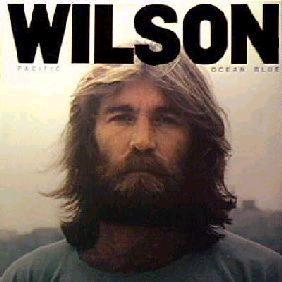
 Paradoxically one of the saddest and most uplifiting albums ever recorded. Dennis Wilson, Beach Boys' drummer and brother to Brian, look seven long years to record this LP. Upon its release Brian sang its praises, but Dennis dismissed it as lacking in substance -- looking forward to his next LP Bamboo, which he promised would be even greater. Opening with the beautiful "River Song" about the country living Dennis longed for, Pacific Ocean Blue is an intensely passionate trip through the West Coast lifestyle that consumed him -- rivaling even Pet Sounds in its emotional intensity and orchestral might.
 Sadly, this was to be Dennis' lone solo release, as in late 1983, he drowned off the coast of Marina Del Ray, CA. Bamboo remained unreleased until the fine folks at Sundazed/Legacy included it in their Deluxe Reissue of the album last year.
Subscribe to:
Comments (Atom)