 If you've been following the goings on down here at The Heat Warps for any length of time, you've no doubt caught a whiff of our serious love of Herbie Hancock's 70s output. The man was simply unstoppable from 1969 on, dropping in on an occasional session with Miles, forming the backbone of what was essentially the house band for CTI in the early part of the decade and, of course, releasing a string of deep funk and daringly experimental LPs with not one, but two legendary combos. Whew. Just thinking about the man's schedule is taxing. And while 1973's Head Hunters was (and maybe still is) the greatest selling jazz LP of all time, to mark the year as any sort of creative peak is a serious misstep. Thrust, the immediate successor to Head Hunters, grooved even harder and tighter, while 1975's Man-Child piled on the guitars (3 to be exact) and went heavy on synths to merge heavy funk with Mwandishi-style headiness. Hell, even Stevie Wonder drops in to blow some harmonica on "Steppin' In It." It could be argued that, despite being overlooked in favor of its more popular an instantly accesable predecessors, Man-Child is the culmination of everything that made Hancock's 70s LPs so impressive. Intelligent songwriting, deep grooves, tasteful instrumentation and an unmatched cast of characters. There definitely a reason it's always finding its way back to the turntable.
Showing posts with label Herbie Hancock. Show all posts
Showing posts with label Herbie Hancock. Show all posts
Thursday
Herbie Hancock
Man-Child - 1975
 If you've been following the goings on down here at The Heat Warps for any length of time, you've no doubt caught a whiff of our serious love of Herbie Hancock's 70s output. The man was simply unstoppable from 1969 on, dropping in on an occasional session with Miles, forming the backbone of what was essentially the house band for CTI in the early part of the decade and, of course, releasing a string of deep funk and daringly experimental LPs with not one, but two legendary combos. Whew. Just thinking about the man's schedule is taxing. And while 1973's Head Hunters was (and maybe still is) the greatest selling jazz LP of all time, to mark the year as any sort of creative peak is a serious misstep. Thrust, the immediate successor to Head Hunters, grooved even harder and tighter, while 1975's Man-Child piled on the guitars (3 to be exact) and went heavy on synths to merge heavy funk with Mwandishi-style headiness. Hell, even Stevie Wonder drops in to blow some harmonica on "Steppin' In It." It could be argued that, despite being overlooked in favor of its more popular an instantly accesable predecessors, Man-Child is the culmination of everything that made Hancock's 70s LPs so impressive. Intelligent songwriting, deep grooves, tasteful instrumentation and an unmatched cast of characters. There definitely a reason it's always finding its way back to the turntable.
If you've been following the goings on down here at The Heat Warps for any length of time, you've no doubt caught a whiff of our serious love of Herbie Hancock's 70s output. The man was simply unstoppable from 1969 on, dropping in on an occasional session with Miles, forming the backbone of what was essentially the house band for CTI in the early part of the decade and, of course, releasing a string of deep funk and daringly experimental LPs with not one, but two legendary combos. Whew. Just thinking about the man's schedule is taxing. And while 1973's Head Hunters was (and maybe still is) the greatest selling jazz LP of all time, to mark the year as any sort of creative peak is a serious misstep. Thrust, the immediate successor to Head Hunters, grooved even harder and tighter, while 1975's Man-Child piled on the guitars (3 to be exact) and went heavy on synths to merge heavy funk with Mwandishi-style headiness. Hell, even Stevie Wonder drops in to blow some harmonica on "Steppin' In It." It could be argued that, despite being overlooked in favor of its more popular an instantly accesable predecessors, Man-Child is the culmination of everything that made Hancock's 70s LPs so impressive. Intelligent songwriting, deep grooves, tasteful instrumentation and an unmatched cast of characters. There definitely a reason it's always finding its way back to the turntable.
Herbie Hancock
Flood (Live) - 1975
 Herbie Hancock was all but unstoppable at the midway point of the 1970s. Following his tenure in Miles' great quintet through the latter half of the 1960s, working with the trumpeter to lay the groundwork for jazz-fusion at the turn of the decade, spacing out and stretching the groove beyond recognition with Mwandishi and pumping out some of the most refined, sophisticated funk of all time with Headhunters, Hancock was the master. It was all his turf. On Flood, the 1975 live album he recorded with the Headhunters lineup in (of all places) the Tokyo Sun Plaza, Hancock doesn't necessarily bring anything that he hasn't brought to record before, but featuring cuts from each of his previous three LPs - all of which are stone classics - the album serves as a Headhunters-era greatest hits that proves, yes, this band really was as good as it sounds on record. Chamelion and Watermelon Man, while great, lack the fire that only comes from having performed them a few too many times, so it's the tunes from Man Child and Thrust that really smoke here. Actual proof, indeed. This two-disc set runs a shade over 74 minutes, so burn it to a single, put it in the dash and enjoy those last few days of summer.
 Herbie Hancock was all but unstoppable at the midway point of the 1970s. Following his tenure in Miles' great quintet through the latter half of the 1960s, working with the trumpeter to lay the groundwork for jazz-fusion at the turn of the decade, spacing out and stretching the groove beyond recognition with Mwandishi and pumping out some of the most refined, sophisticated funk of all time with Headhunters, Hancock was the master. It was all his turf. On Flood, the 1975 live album he recorded with the Headhunters lineup in (of all places) the Tokyo Sun Plaza, Hancock doesn't necessarily bring anything that he hasn't brought to record before, but featuring cuts from each of his previous three LPs - all of which are stone classics - the album serves as a Headhunters-era greatest hits that proves, yes, this band really was as good as it sounds on record. Chamelion and Watermelon Man, while great, lack the fire that only comes from having performed them a few too many times, so it's the tunes from Man Child and Thrust that really smoke here. Actual proof, indeed. This two-disc set runs a shade over 74 minutes, so burn it to a single, put it in the dash and enjoy those last few days of summer.
Tuesday
Herbie Hancock
Thrust - 1974
 Following a period of intense exploration throughout the early 1970s, Herbie Hancock felt it was time to cut the fuss and drop the funk. And drop it, he did. With his massively successful 1973 Headhunters LP all but solidifying the genre of jazz-funk, it's truly amazing how its follow up has been left in the shadows for so long - especially when considering that Thrust may be the better album! The most notable difference from its predecessor is in the tighter, more complex drumming of Mike Clark, who had recently replaced Harvey Mason in the band's lineup. If you've heard anything from Thrust, it's likely to be Clark's frequently-copped groove that opens the album. And with that, the tone is set. Hancock's keyboard work is typically incredible - taking the wah'd clavinet and the ARP synth to greater depths than on any of his early 70s LPs - while Bennie Maupin fills out the low end with the bass clarinet that is a cornerstone of fusion in its own right (just check out the man's discography for heaven's sake!). While Headhunters may contain "Chameleon", Thrust lays claim to everything else. A magnificent LP from end to end.
 Following a period of intense exploration throughout the early 1970s, Herbie Hancock felt it was time to cut the fuss and drop the funk. And drop it, he did. With his massively successful 1973 Headhunters LP all but solidifying the genre of jazz-funk, it's truly amazing how its follow up has been left in the shadows for so long - especially when considering that Thrust may be the better album! The most notable difference from its predecessor is in the tighter, more complex drumming of Mike Clark, who had recently replaced Harvey Mason in the band's lineup. If you've heard anything from Thrust, it's likely to be Clark's frequently-copped groove that opens the album. And with that, the tone is set. Hancock's keyboard work is typically incredible - taking the wah'd clavinet and the ARP synth to greater depths than on any of his early 70s LPs - while Bennie Maupin fills out the low end with the bass clarinet that is a cornerstone of fusion in its own right (just check out the man's discography for heaven's sake!). While Headhunters may contain "Chameleon", Thrust lays claim to everything else. A magnificent LP from end to end.
Wednesday
Herbie Hancock
Crossings - 1971
 A couple of years before he emerged as one of the most commercially successful fusion artists of the 1970s, Herbie Hancock was deeply entrenched in creating albums that took electronic music to soaring heights and stretched improvisation to its limits. The second in a trilogy of LPs that included Mwandishi and Sextant, Crossings benefits from incorporating the elements that defined what was so unique about both of these; the solid, proto-funk grooves of the former and the far out synth-based, skeletal rhythms of the latter. Comprised of a mere three tracks, the first of which is a 24-minute, 3-part suite, this is avant-garde funk at its finest, performed by a crew of musicians that all but defined the genre. Very weird, precisely executed and extremely rewarding.
 A couple of years before he emerged as one of the most commercially successful fusion artists of the 1970s, Herbie Hancock was deeply entrenched in creating albums that took electronic music to soaring heights and stretched improvisation to its limits. The second in a trilogy of LPs that included Mwandishi and Sextant, Crossings benefits from incorporating the elements that defined what was so unique about both of these; the solid, proto-funk grooves of the former and the far out synth-based, skeletal rhythms of the latter. Comprised of a mere three tracks, the first of which is a 24-minute, 3-part suite, this is avant-garde funk at its finest, performed by a crew of musicians that all but defined the genre. Very weird, precisely executed and extremely rewarding.
Monday
Miles Davis
Deep Brew (Bitches Brew Recording Sessions) - 1969
Volume 1, Volume 2
 Aside from being among the most powerful statements in the history of recorded music, Miles Davis' 1969 Bitches Brew LP also stands as a testament to the incredible editing work of the album's producer, Teo Macero. Throughout three studio sessions on August 19-21, 1969, Miles led ensembles of up to 13 musicians through numerous song sketches, bizarre atonal experiments and dense polyrhythmic vamps that forced them to listen closely to one another and allow the music to take on a life of its own. In some of the quieter moments you can actually hear Miles giving instructions by snapping his fingers to set the tempo, telling individuals where to solo, or, in his distinctive whisper, saying, "Keep it tight"; indicating that all the while he and Macero maintained a clear picture of how they would fuse these sections into cohesive compositions. Considering this method of recording, the resulting LP is nothing short of astonishing.
Going well beyond the expansive Complete Bitches Brew Sessions box set, Deep Brew, Volumes 1 & 2 collects nearly all of the material recorded during those August sessions. Amazing stuff.
*Many, many thanks to Heat Warps' visitor Hansame for sharing this incredible set!
Volume 1, Volume 2
 Aside from being among the most powerful statements in the history of recorded music, Miles Davis' 1969 Bitches Brew LP also stands as a testament to the incredible editing work of the album's producer, Teo Macero. Throughout three studio sessions on August 19-21, 1969, Miles led ensembles of up to 13 musicians through numerous song sketches, bizarre atonal experiments and dense polyrhythmic vamps that forced them to listen closely to one another and allow the music to take on a life of its own. In some of the quieter moments you can actually hear Miles giving instructions by snapping his fingers to set the tempo, telling individuals where to solo, or, in his distinctive whisper, saying, "Keep it tight"; indicating that all the while he and Macero maintained a clear picture of how they would fuse these sections into cohesive compositions. Considering this method of recording, the resulting LP is nothing short of astonishing.
Going well beyond the expansive Complete Bitches Brew Sessions box set, Deep Brew, Volumes 1 & 2 collects nearly all of the material recorded during those August sessions. Amazing stuff.
*Many, many thanks to Heat Warps' visitor Hansame for sharing this incredible set!
Wednesday
Joe Zawinul
Zawinul - 1970
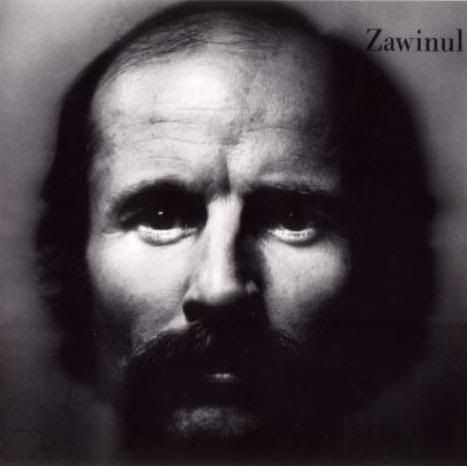
 There has possibly never been a pianist who has explored the Fender Rhodes to a greater depth than Zoe Zawinul ... except for maybe Herbie Hancock. Thankfully, this LP contains them both. A towering monument of late 60s jazz fusion, Joe Zawinul's self titled LP stands up to In a Silent Way as one of the greatest electric piano-based albums of all time. In fact, it's easy to look at Zawinul as the sequel to Davis 1969 masterpiece, as both LPs included Zawinul and Hancock on Fender Rhodes, both feature extended exercises in subtle textures and mood, both include Zawinul's tune "In a Silent Way", albeit in drastically different forms, and esthetically, both covers are strikingly similar in the way the bandleader's head takes up the entire frame. Similarities aside, Zawinul and Hancock's use of ring modulators, echo and a bevy of other effects take the music and the Rhodes itself, into an entirely different sonic realm than Davis' album and well past the psychedelic boundaries that any rock group (then or now) could dream to tread. A landmark LP on so many levels. Enjoy.
Thursday
Miles Davis
Directions - 1980
 To satiate his fans during his "retirement" in the late 70s, Columbia issued two fine rarities collections that focused on the rarely-heard (at that time) transitional periods of Miles Davis' career, Circle in the Round, which chronicled the years 1955-1970, and Directions, which covered 1960-1970. While Circle in the Round is notable for containing an all-acoustic version of Sanctuary, a tune that was later re-recorded in full electric glory for Bitches Brew, as well as a hauntingly majestic rendition of David Crosby's Guennevere, Directions simply overflows with gems from Miles' late 60s fusion peak - the rare period before everyone else fell in line and the road belonged to Miles alone. The Complete In A Silent Way and Jack Johnson session box sets have since collected most of the tunes on Directions, however this double LP places them in a context that illustrates Miles' transformation like neither of the sessions sets could, simply because it speeds up the process. Highlights include the tightly-wound funk morsel "Duran" featuring a smokin' John McLaughlin and "Willie Nelson" in all its wah-wah glory. Dig it now.
*Another fine Slidewell contribution. Thanks again to him for sharing the wealth with The Heat Warps.
 To satiate his fans during his "retirement" in the late 70s, Columbia issued two fine rarities collections that focused on the rarely-heard (at that time) transitional periods of Miles Davis' career, Circle in the Round, which chronicled the years 1955-1970, and Directions, which covered 1960-1970. While Circle in the Round is notable for containing an all-acoustic version of Sanctuary, a tune that was later re-recorded in full electric glory for Bitches Brew, as well as a hauntingly majestic rendition of David Crosby's Guennevere, Directions simply overflows with gems from Miles' late 60s fusion peak - the rare period before everyone else fell in line and the road belonged to Miles alone. The Complete In A Silent Way and Jack Johnson session box sets have since collected most of the tunes on Directions, however this double LP places them in a context that illustrates Miles' transformation like neither of the sessions sets could, simply because it speeds up the process. Highlights include the tightly-wound funk morsel "Duran" featuring a smokin' John McLaughlin and "Willie Nelson" in all its wah-wah glory. Dig it now.
*Another fine Slidewell contribution. Thanks again to him for sharing the wealth with The Heat Warps.
Friday
Miroslav Vitous
Mountain In The Clouds/Infinite Search - 1969
 Much like John McLaughlin's Devotion LP, Mountain in the Clouds was recorded in that rare pocket of time after which all of its players had (in most cases) recently left Miles Davis' band, but hadn't yet formed their own groups. The music is, not surprisingly, very similar to what Miles was doing towards the end of the 60s and at many points sounds like Bitches Brew filtered through a smaller ensemble. Originally released in 1969, but trimmed down and reissued the same year (who on Earth knows why...), the version here is the original Mountain in the Clouds LP and therefore contains the track "Cerecka" which was trimmed from the subsequent Infinite Search reissue. Very confusing, I know. Either way, this often overlooked album is a high water mark of the early days of jazz fusion and a must-have for those looking to dive a little deeper into Miles' directions.
Lineup:
Miroslav Vitous, bass
Joe Henderson, tenor sax
John McLaughlin, guitar
Herbie Hancock, electric piano
Jack Dejohnette, drums
Joe Chambers, drums
 Much like John McLaughlin's Devotion LP, Mountain in the Clouds was recorded in that rare pocket of time after which all of its players had (in most cases) recently left Miles Davis' band, but hadn't yet formed their own groups. The music is, not surprisingly, very similar to what Miles was doing towards the end of the 60s and at many points sounds like Bitches Brew filtered through a smaller ensemble. Originally released in 1969, but trimmed down and reissued the same year (who on Earth knows why...), the version here is the original Mountain in the Clouds LP and therefore contains the track "Cerecka" which was trimmed from the subsequent Infinite Search reissue. Very confusing, I know. Either way, this often overlooked album is a high water mark of the early days of jazz fusion and a must-have for those looking to dive a little deeper into Miles' directions.
Lineup:
Miroslav Vitous, bass
Joe Henderson, tenor sax
John McLaughlin, guitar
Herbie Hancock, electric piano
Jack Dejohnette, drums
Joe Chambers, drums
Monday
Herbie Hancock
Fat Albert Rotunda - 1969
 Centered around his soundtrack for Bill Cosby's cartoon show, Herbie Hancock dropped his first slice of jazz-funk with Fat Albert Rotunda. Resembling the fusion work Miles Davis was creating around the same time (not surprisingly, since Hancock had just left Davis' group months before recording this album) Fat Albert Rotunda doesn't feature the super-heavy funk that would become his trademark on album's like Headhunters and Thrust, but carries more of a Sly Stone inspired, late-60s R&B bend. The songs and the grooves are solid throughout, and Hancock's Fender Rhodes work is incredibly focused and unadorned with the mountains of effects he would apply to great use throughout the rest of his career.
Mwandishi - 1971
 Recorded in one New Year's Eve session in 1970, Mwandishi is the point at which Herbie Hancock's music really took off into outer space. Layered with reverb, stereo tremelo (get out yer headphones for this one) and Echoplex, Hancock's keyboard work is simply otherworldly. The album carries over much of the funk that dominated Fat Albert Rotunda, but the songs (there are only three of them here) are stretched to over 10, 13 and 20 minutes through the sonic experimentation of this great electric sextet. The similarities to Miles Davis' Bitches Brew LP are made even more apparent through the ominous bass clarinet work of Bennie Maupin, who lended that album much of its dark, haunting appeal and provides much of the same here.
 Centered around his soundtrack for Bill Cosby's cartoon show, Herbie Hancock dropped his first slice of jazz-funk with Fat Albert Rotunda. Resembling the fusion work Miles Davis was creating around the same time (not surprisingly, since Hancock had just left Davis' group months before recording this album) Fat Albert Rotunda doesn't feature the super-heavy funk that would become his trademark on album's like Headhunters and Thrust, but carries more of a Sly Stone inspired, late-60s R&B bend. The songs and the grooves are solid throughout, and Hancock's Fender Rhodes work is incredibly focused and unadorned with the mountains of effects he would apply to great use throughout the rest of his career.
Mwandishi - 1971
 Recorded in one New Year's Eve session in 1970, Mwandishi is the point at which Herbie Hancock's music really took off into outer space. Layered with reverb, stereo tremelo (get out yer headphones for this one) and Echoplex, Hancock's keyboard work is simply otherworldly. The album carries over much of the funk that dominated Fat Albert Rotunda, but the songs (there are only three of them here) are stretched to over 10, 13 and 20 minutes through the sonic experimentation of this great electric sextet. The similarities to Miles Davis' Bitches Brew LP are made even more apparent through the ominous bass clarinet work of Bennie Maupin, who lended that album much of its dark, haunting appeal and provides much of the same here.
Subscribe to:
Posts (Atom)