 By the latter half of the 70s, Neil Young had put his ditch days behind him, had Zuma'd up and down the California coast with Crazy Horse, and seemed pretty damn content with recording a string of laid back, though pretty inoffensive country rock LPs. Young's short run with The Ducks in the late summer of 1977 was all at once strange anomaly, a high water mark and a signpost marking a change of course. Comprised of Young, Moby Grape vocalist Bob Mosely, "Hey Hey, My My" co-author Jeff Blackburn and sometime session man Johnny Craviotto, The Ducks were quite possibly the most popular townie bar band of all time, as Young's contractual obligations with Crazy Horse specified he could only tour with them, forcing The Ducks to play all of their 22 gigs within the Santa Cruz city limits. Loaded with songwriters, the band's setlists were comprised of original material, a few tunes from each member's back catalog and a handful of covers. The shows were tight, Young seemed to enjoy his supporting role, and, in the beginning, the crowds were enthusiastic if a little awed at their strange fortune. After a few weeks the hordes of out of towners hoping to hear some classic Neil Young tunes grew exponentially, and with its secret out, Young left the group less than two months after its first gig. And though a mobile recording rig was often spotted outside the club for most of the shows, this unofficial, surprisingly clear fan recording is the only aural evidence in circulation.
Showing posts with label Booze. Show all posts
Showing posts with label Booze. Show all posts
Sunday
Neil Young and the Ducks
Live at the Catalyst, August 22, 1977
 By the latter half of the 70s, Neil Young had put his ditch days behind him, had Zuma'd up and down the California coast with Crazy Horse, and seemed pretty damn content with recording a string of laid back, though pretty inoffensive country rock LPs. Young's short run with The Ducks in the late summer of 1977 was all at once strange anomaly, a high water mark and a signpost marking a change of course. Comprised of Young, Moby Grape vocalist Bob Mosely, "Hey Hey, My My" co-author Jeff Blackburn and sometime session man Johnny Craviotto, The Ducks were quite possibly the most popular townie bar band of all time, as Young's contractual obligations with Crazy Horse specified he could only tour with them, forcing The Ducks to play all of their 22 gigs within the Santa Cruz city limits. Loaded with songwriters, the band's setlists were comprised of original material, a few tunes from each member's back catalog and a handful of covers. The shows were tight, Young seemed to enjoy his supporting role, and, in the beginning, the crowds were enthusiastic if a little awed at their strange fortune. After a few weeks the hordes of out of towners hoping to hear some classic Neil Young tunes grew exponentially, and with its secret out, Young left the group less than two months after its first gig. And though a mobile recording rig was often spotted outside the club for most of the shows, this unofficial, surprisingly clear fan recording is the only aural evidence in circulation.
By the latter half of the 70s, Neil Young had put his ditch days behind him, had Zuma'd up and down the California coast with Crazy Horse, and seemed pretty damn content with recording a string of laid back, though pretty inoffensive country rock LPs. Young's short run with The Ducks in the late summer of 1977 was all at once strange anomaly, a high water mark and a signpost marking a change of course. Comprised of Young, Moby Grape vocalist Bob Mosely, "Hey Hey, My My" co-author Jeff Blackburn and sometime session man Johnny Craviotto, The Ducks were quite possibly the most popular townie bar band of all time, as Young's contractual obligations with Crazy Horse specified he could only tour with them, forcing The Ducks to play all of their 22 gigs within the Santa Cruz city limits. Loaded with songwriters, the band's setlists were comprised of original material, a few tunes from each member's back catalog and a handful of covers. The shows were tight, Young seemed to enjoy his supporting role, and, in the beginning, the crowds were enthusiastic if a little awed at their strange fortune. After a few weeks the hordes of out of towners hoping to hear some classic Neil Young tunes grew exponentially, and with its secret out, Young left the group less than two months after its first gig. And though a mobile recording rig was often spotted outside the club for most of the shows, this unofficial, surprisingly clear fan recording is the only aural evidence in circulation.
Thursday
The Faces
Coast to Coast: Overture and Beginners - 1974
 Though the band lost its spiritual core when bassist and founding member Ronnie Lane left in 1973 to form his own group, Slim Chance, the Faces remained one of the few bands in town able to challenge the Rolling Stones' title of World's Greatest Rock and Roll Band up until they disintegrated in 1975. With four magnificent studio LPs under their belt, the band only released one official album that showcased where their bread was buttered, Coast to Coast: Overture and Beginners, a live LP recorded at a pair of Los Angeles dates in 1973. The band is ragged and the tunes have a slower, almost molasses-thick drive to them, but all of these reckless elements are what coalesced to make this band the endearing and enduring live act that it always was. At this point in their evolution, not having Lane to share the mic and spotlight with brought Rod Stewart to full bloom, for better or for worse. The fact that so few high-quality live recordings exist of a band who staked their claim on the stage, makes this one all the better. The CD version of this classic is long out of print, but hopefully this means that a deluxe reissue is just around the corner. Best enjoyed with a bottle of Blue Nun, Rod's favorite.
 Though the band lost its spiritual core when bassist and founding member Ronnie Lane left in 1973 to form his own group, Slim Chance, the Faces remained one of the few bands in town able to challenge the Rolling Stones' title of World's Greatest Rock and Roll Band up until they disintegrated in 1975. With four magnificent studio LPs under their belt, the band only released one official album that showcased where their bread was buttered, Coast to Coast: Overture and Beginners, a live LP recorded at a pair of Los Angeles dates in 1973. The band is ragged and the tunes have a slower, almost molasses-thick drive to them, but all of these reckless elements are what coalesced to make this band the endearing and enduring live act that it always was. At this point in their evolution, not having Lane to share the mic and spotlight with brought Rod Stewart to full bloom, for better or for worse. The fact that so few high-quality live recordings exist of a band who staked their claim on the stage, makes this one all the better. The CD version of this classic is long out of print, but hopefully this means that a deluxe reissue is just around the corner. Best enjoyed with a bottle of Blue Nun, Rod's favorite.
Friday
Leonard Cohen
Death of a Ladies' Man - 1977
 Toward the end of the 1970s, the careers of Leonard Cohen and Phil Spector were headed in opposite trajectories. Cohen rode high on a five album creative streak that had begun with his debut LP nine years previous, and Spector was spiraling down a well of drink, drugs, bizarre behavior and a string of albums that, while brilliant, were so polarizing that labels often had to be sweet talked into putting them out. Naturally, their great summit of 1977 was one that continues to divide, challenge and amaze. But as Spector put it, midway through their three-week songwriting binge that resulted in 15 new tracks, there's no denying that this is some "great fucking music." Discussing Cohen's contribution here is almost pointless, since the man's ability to craft a lyric and turn a phrase is sickeningly consistent - and aside from Spector's obvious influence on stripping a few layers of subtlety here and there and adding a touch of tasteful schmaltz to the choruses, Death of a Ladies' Man only continues the hot streak. It shouldn't be a surprise then, that the real magic of this record lies in Spector's typically over the top production. If his records of the classic era were Wall of Sound, the noise he creates here pours in through tunnels and waves, with his wrecking crew of the mid 60s reprising their role with some added syrupy 70s grandeur and a layer of echo so thick that it practically becomes an instrument in itself. It's worth noting that Bob Dylan and Allen Ginsberg drop by to lend their voices to the raucous "Don't Go Home With Your Hard-On" - a raveup that nearly disrupts the flow, but as a testament to the strength of this record, hardly creates a ripple. Unquestionably weird, but bruised and lovely all the same, this LP must be heard to be believed.
 Toward the end of the 1970s, the careers of Leonard Cohen and Phil Spector were headed in opposite trajectories. Cohen rode high on a five album creative streak that had begun with his debut LP nine years previous, and Spector was spiraling down a well of drink, drugs, bizarre behavior and a string of albums that, while brilliant, were so polarizing that labels often had to be sweet talked into putting them out. Naturally, their great summit of 1977 was one that continues to divide, challenge and amaze. But as Spector put it, midway through their three-week songwriting binge that resulted in 15 new tracks, there's no denying that this is some "great fucking music." Discussing Cohen's contribution here is almost pointless, since the man's ability to craft a lyric and turn a phrase is sickeningly consistent - and aside from Spector's obvious influence on stripping a few layers of subtlety here and there and adding a touch of tasteful schmaltz to the choruses, Death of a Ladies' Man only continues the hot streak. It shouldn't be a surprise then, that the real magic of this record lies in Spector's typically over the top production. If his records of the classic era were Wall of Sound, the noise he creates here pours in through tunnels and waves, with his wrecking crew of the mid 60s reprising their role with some added syrupy 70s grandeur and a layer of echo so thick that it practically becomes an instrument in itself. It's worth noting that Bob Dylan and Allen Ginsberg drop by to lend their voices to the raucous "Don't Go Home With Your Hard-On" - a raveup that nearly disrupts the flow, but as a testament to the strength of this record, hardly creates a ripple. Unquestionably weird, but bruised and lovely all the same, this LP must be heard to be believed.
Wednesday
Ron Wood
I've Got My Own Album To Do - 1974
 Ranking right up there with Harry Nilsson's Pussy Cats LP in terms of the greatest "buddy" album of all time, Ron Wood's first solo effort was one that simultaneously showcased his immense talent as a guitarist and songwriter, as well as his seemingly endless pool of kick ass rock star friends that were willing to lend him a hand. Considering his reputation as one of the all around nicest guys in rock music, it's no surprise that the list of guest musicians here includes not only the majority of the Rolling Stones, half of the the Faces and George Harrison but a wealth of contributors that remain uncredited (although I swear I hear the voice and drums of The Band's Levon Helm on a couple of tracks). Such an immense pool of musicians and the egos that they carry could have easily overwhelmed the proceedings here, but the sense of camaraderie and unabashed joy rules over this album, and the result is a tight collection of tunes that sounds exactly as you'd expect it to when considering the participants. Equal parts Stones and Faces, the LP features duets galore, most notably Jagger and Wood on the opening track, Keith Richards is all over the place here, obviously enjoying the brief step away from the spotlight, and the Faces' Ian McLagan is an absolute monster on the Wurlitzer piano. Hell, even Rod Stewart took a break from chasing supermodels to join in on the action. Easily one of the finest off-the-radar albums of the decade.
Tuesday
The Kinks
Everybody's in Show-Biz - 1972
 The first Kinks album on which Ray Davies dabbled in the eccentricities that began the band's spiral into vaudevillian camp, Everybody's in Show-Biz is also the last album to maintain the songwriting quality of their late '60s and early '70s LPs. Tales of domesticity and life on the road make up the majority of the first LP of this double set, and although it doesn't quite reach an Arthur... or Village Green... level in terms of a fully formed concept, the songs themselves are really tremendous. My favorites are numerous, but "Hot Potatoes" and "Here Comes Yet Another Day" are absolute classics. Having finally hit their stride as a touring act, the band devotes the second record to a compilation of live tracks - most of which are pulled from the previous year's Muswell Hillbillies album. Buoyed by a full horn section and John Gosling's keyboards, the tunes are executed incredibly well - at points even, more so than their studio counterparts - but Davies' performance as the front man fop steals the show. Sadly, "Lola" is represented here in spirit only, and includes only the crowd sing-along of the chorus. But in the end, its this combination of drunken weirdness and casual brilliance that makes the album so appealing. Not necessarily a great introduction to the Kinks, but once you’ve digested the hits, head here for dessert.
Monday
John Lennon
Mind Games - 1973
 Mind Games marked the beginning of John Lennon's "lost weekend" period, and the evidence is all over this album. Having written the bulk of the material here immediately following his separation from Yoko, this is his first major step away from the political slant he had taken since the start of his solo career, and the album's tone is understandably mournful and apologietic throughout. That's not to say Mind Games is a downer. Much like Harry Nilsson's Pussycats LP he'd produce in 1974, Mind Games is a scattershot collection of tunes tend to come off as hastily written and recorded upon first listen, but reveal intense depth and an all encompassing tone of mayhem once they get under your skin. There are better John Lennon albums out there, but in case you've overlooked Mind Games, go ahead and give it a second chance. It's well worth it. The title track, "Aisumasen (I'm Sorry)" and "You Are Here" are a few of my favorites. Please enjoy.
 Mind Games marked the beginning of John Lennon's "lost weekend" period, and the evidence is all over this album. Having written the bulk of the material here immediately following his separation from Yoko, this is his first major step away from the political slant he had taken since the start of his solo career, and the album's tone is understandably mournful and apologietic throughout. That's not to say Mind Games is a downer. Much like Harry Nilsson's Pussycats LP he'd produce in 1974, Mind Games is a scattershot collection of tunes tend to come off as hastily written and recorded upon first listen, but reveal intense depth and an all encompassing tone of mayhem once they get under your skin. There are better John Lennon albums out there, but in case you've overlooked Mind Games, go ahead and give it a second chance. It's well worth it. The title track, "Aisumasen (I'm Sorry)" and "You Are Here" are a few of my favorites. Please enjoy.
 Wednesday
The Kinks
Muswell Hillbillies - 1971
 With every other band of the early 70s time trying their hand at a "back to the roots" record, it's no surprise that the Kinks joined in the fun. The real surprise was that it ended up being one of their finest LPs. Kicking off with the tremendous "20th Century Man", it's evident that Muswell Hillbillies is a strong album, while "Acute Schizophrenia Paranoi Blues", "Holiday", "Alcohol" and "Oklahoma USA" were immediate concert favorites and continue to make appearances in Ray Davies' solo sets. While Village Green..., Arthur and Lola are undeniable classics, none of them come close to the consistency of Muswell Hillbillies. Just listen for yourself! Ray Davies at his songwriting peak and the Kinks in their boozy woozy prime. Cheers to that.
 With every other band of the early 70s time trying their hand at a "back to the roots" record, it's no surprise that the Kinks joined in the fun. The real surprise was that it ended up being one of their finest LPs. Kicking off with the tremendous "20th Century Man", it's evident that Muswell Hillbillies is a strong album, while "Acute Schizophrenia Paranoi Blues", "Holiday", "Alcohol" and "Oklahoma USA" were immediate concert favorites and continue to make appearances in Ray Davies' solo sets. While Village Green..., Arthur and Lola are undeniable classics, none of them come close to the consistency of Muswell Hillbillies. Just listen for yourself! Ray Davies at his songwriting peak and the Kinks in their boozy woozy prime. Cheers to that.
Thursday
Dennis Wilson
Bamboo - Unreleased
 Planned as the follow up to the magnificent Pacific Ocean Blue, this second and final Dennis Wilson LP has remained unreleased since his death in 1983. While the majority of the songs here were never finished, Wilson's ambition to make this record more stylistically diverse than its predecessor is still evident. Check out the southern horns and lap steel on the instrumental "New Orleans", or the funky percussion on "Companion". Yet, much like Pacific Ocean Blue this is an aural record of a man losing his grip and falling apart -- which is, oddly, what makes it so appealing. Since the album was never completed, the tracklisting has remained unknown, though the folks over at Dennis Wilson Dreamer have a wealth of information about this album, so be sure to pay them a visit.
 Planned as the follow up to the magnificent Pacific Ocean Blue, this second and final Dennis Wilson LP has remained unreleased since his death in 1983. While the majority of the songs here were never finished, Wilson's ambition to make this record more stylistically diverse than its predecessor is still evident. Check out the southern horns and lap steel on the instrumental "New Orleans", or the funky percussion on "Companion". Yet, much like Pacific Ocean Blue this is an aural record of a man losing his grip and falling apart -- which is, oddly, what makes it so appealing. Since the album was never completed, the tracklisting has remained unknown, though the folks over at Dennis Wilson Dreamer have a wealth of information about this album, so be sure to pay them a visit.
Neil Young
Time Fades Away - 1973
 One of the two Neil Young albums that to this day, remain unreleased on CD, Time Fades Away is the first entry in what is considered Young's "In the Ditch" trilogy. In the liner notes for his 3-LP compilation Decade, Young writes:
"'Heart of Gold' put me in the middle of the road. Traveling there soon became a bore so I headed for the ditch."
While rehearsing for a grueling 90 city tour in support of Harvest, Young's guitarist Danny Whitten was in the midst of trying to kick heroin. In no shape for the road, Whitten was fired from the band and given fifty dollars and a plane ticket home. The next day, Whitten was dead, having used his severance pay to buy the drugs that killed him. The Time Fades Away album is a live recording of the handful of new songs Young and his band played on the subsequent tour, and despite the addition of David Crosby and Graham Nash on several tracks, the mood is expectedly dire. Hands down the most emotionally charged and erratic album in Young's vast catalog, and essential listening for fans of the two released albums in the trilogy, Tonight's the Night and On the Beach. Thrasher's Wheat has a great site dedicated to the "ditch trilogy", including quotes, reviews, history and cover art.
 One of the two Neil Young albums that to this day, remain unreleased on CD, Time Fades Away is the first entry in what is considered Young's "In the Ditch" trilogy. In the liner notes for his 3-LP compilation Decade, Young writes:
"'Heart of Gold' put me in the middle of the road. Traveling there soon became a bore so I headed for the ditch."
While rehearsing for a grueling 90 city tour in support of Harvest, Young's guitarist Danny Whitten was in the midst of trying to kick heroin. In no shape for the road, Whitten was fired from the band and given fifty dollars and a plane ticket home. The next day, Whitten was dead, having used his severance pay to buy the drugs that killed him. The Time Fades Away album is a live recording of the handful of new songs Young and his band played on the subsequent tour, and despite the addition of David Crosby and Graham Nash on several tracks, the mood is expectedly dire. Hands down the most emotionally charged and erratic album in Young's vast catalog, and essential listening for fans of the two released albums in the trilogy, Tonight's the Night and On the Beach. Thrasher's Wheat has a great site dedicated to the "ditch trilogy", including quotes, reviews, history and cover art.
Friday
Harry Nilsson
Pussy Cats - 1974
 Listening to this album is the musical equivilent of watching a prize fighter in the decline of his career. Famously produced by John Lennon during his "Lost Weekend" period in 1974, Pussy Cats is often regarded as one of Nilsson's weaker albums due to the fact that he lost his voice halfway through the recording of it. Keeping the news from Lennon out of fear he'd abandon the project, Nilsson forged ahead, recording a slew of rock n' roll classics and engaging in drunken revelry with a huge cast of backing musicians that included Ringo, Keith Moon, Bobby Keys and Sneeky Pete Kleinow. While it's entertaining to hear Nilsson run through these oldies (each coated in a layer of Phil Spector glaze), the real treat here are his originals, which stack up as some of the most engaging in his entire catalogue--namely "Don't Forget Me" and "All My Life". My favorite of the bunch is "Old Forgotten Soldier", where his ragged voice fits the song's context so well you'd think he's putting you on. The four bonus tracks on this one include a great solo version of "Save the Last Dance for Me", with Nilsson accompanying himself on Fender Rhodes.
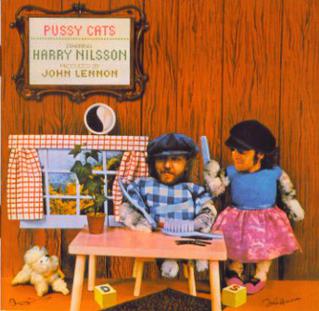 Listening to this album is the musical equivilent of watching a prize fighter in the decline of his career. Famously produced by John Lennon during his "Lost Weekend" period in 1974, Pussy Cats is often regarded as one of Nilsson's weaker albums due to the fact that he lost his voice halfway through the recording of it. Keeping the news from Lennon out of fear he'd abandon the project, Nilsson forged ahead, recording a slew of rock n' roll classics and engaging in drunken revelry with a huge cast of backing musicians that included Ringo, Keith Moon, Bobby Keys and Sneeky Pete Kleinow. While it's entertaining to hear Nilsson run through these oldies (each coated in a layer of Phil Spector glaze), the real treat here are his originals, which stack up as some of the most engaging in his entire catalogue--namely "Don't Forget Me" and "All My Life". My favorite of the bunch is "Old Forgotten Soldier", where his ragged voice fits the song's context so well you'd think he's putting you on. The four bonus tracks on this one include a great solo version of "Save the Last Dance for Me", with Nilsson accompanying himself on Fender Rhodes.
Subscribe to:
Posts (Atom)